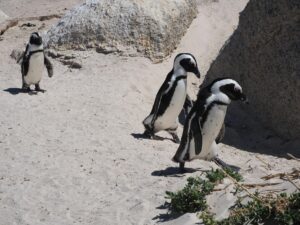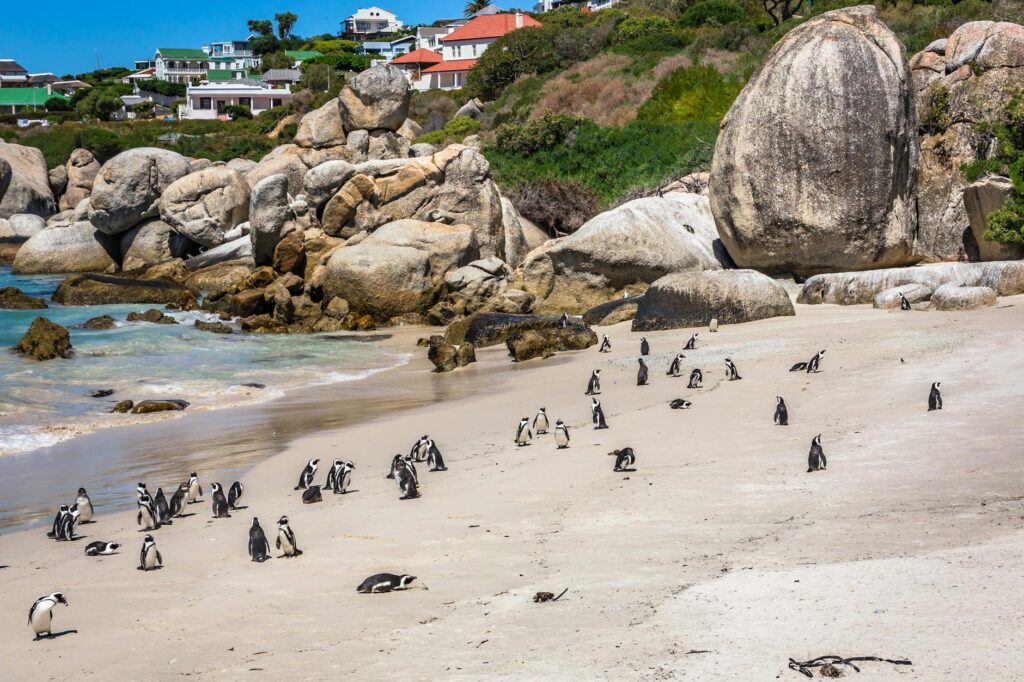
When you round the corner at Boulders Beach for the first time, there they are: African penguins waddling across white sand, preening between granite boulders, slipping in and out of the shallows. It’s one of those moments that feels impossibly close—metres away from a bird you’ve only ever seen in documentaries. This is the point: Boulders Beach isn’t a zoo exhibit or a wildlife sanctuary. It’s their home, and you’re visiting.
Located in Simon’s Town on the Cape Peninsula, Boulders Beach is home to the only mainland African penguin colony in the world. Since 1982, when the first penguins arrived and decided the sheltered cove was ideal, the population has grown to between 2,000 and 3,000 birds. For a day trip from Cape Town, this is as essential as it gets.
Getting there: driving and train options
By car: Simon’s Town is about 40 km south of the Cape Town CBD via the M3 and M4 highways. In normal traffic, plan for 39 minutes to an hour of driving. You’ll pass through Muizenberg and Fish Hoek before reaching Simon’s Town. The route is scenic—you’re skirting False Bay the whole way—but don’t expect a quick dash. Peak afternoon traffic can slow things considerably.
By train: The Metrorail Southern Line runs to Simon’s Town, taking roughly 60 minutes from Cape Town Central. Trains now run more frequently than before—new rolling stock added in March 2025 reduced headways from 45 to 20 minutes on regular services. However, the line has a patchy history. The section between Glencairn and Simon’s Town runs but can face disruptions from sand on the tracks, and shuttle services sometimes replace trains. Weekends are less frequent (every hour on Saturday, every two hours on Sunday). The journey is scenic, but if timing is critical for your visit, drive.
Entrance fees (2024–2025)
Boulders Beach is part of Table Mountain National Park. Entry is cash-free—card payments only. Here are the current rates, valid until October 2025:
- South African residents: R50 per adult, R25 per child
- SADC nationals: R100 per adult, R50 per child
- International visitors: R215 per adult, R105 per child
If you’re a South African resident, bring proof of ID at the gate. The conservation fee supports penguin protection and beach maintenance.
Opening hours and planning your visit
Hours vary by season:
- December–January: 7:00 AM–7:30 PM
- February–March: 8:00 AM–6:30 PM
- April–September: 8:00 AM–5:00 PM
- October–November: 8:00 AM–6:30 PM
Arrive early or late. Tour buses roll in mid-morning, and the viewing areas can feel crowded by 10–11 AM. If you want the beach to yourself and the best light for photos, get there when gates open—7:00 AM in summer, 8:00 AM in other seasons. Late afternoon is your other window: after 3:00 PM, most day-trippers have moved on, and you’ll see hundreds of penguins returning from fishing, which is a sight in itself.
Best time of year: breeding season and weather
For the penguins: March to May is peak breeding season. Chicks fledge in February, so if you want to see younger birds or maximise your penguin count, aim for late February through May. The colony is active year-round, but these months offer the most energy and activity.
For the weather and crowds: Spring (September–November) and autumn (March–May) offer warm days without the December-to-February summer crush. Winter (June–August) is cooler and quieter, but still rewarding if you’re willing to wrap up. Peak tourist season runs through summer, so expect larger crowds then.
Parking and practicalities
Official parking is available at two spots. The main Boulders Beach car park has limited spaces (it fills early on summer weekends). Seaforth Square, a 5-minute walk away, offers free alternatives, though it’s also tight. There’s free but limited parking on Bellevue Road and Link Crescent nearby.
Don’t park on the road—visitors have received tickets. Tip the car guard R5–R10 if they’ve looked after your car. Watch your tyres in the dirt lot; the sharp rocks can cause damage.
On-site: what to expect
You’ll access the colony via a boardwalk system that takes you within metres of the penguins. Foxy Beach is the main viewing area—a small sandy cove where you can see birds hauled out and swimming. The boardwalk is well maintained and the walk is gentle; this isn’t a hike.
You can’t swim with the penguins (it’s protected habitat), but Boulders Beach itself has a swimming area away from the colony. Facilities are basic: restrooms, a small visitor centre, and water fountains. There are no shops on-site, so bring water and snacks or eat before you arrive.
A note on conservation
African penguins are critically endangered. The global population has declined 95% since pre-industrial times. What you’ll see at Boulders Beach is one of the last strongholds—and every visitor fee directly supports protection efforts. The entrance charge isn’t just a gate fee; it’s conservation funding. This context makes the experience different. You’re not just observing wildlife; you’re supporting its survival.
Simon’s Town: eat after
The village of Simon’s Town is right there. Jubilee Square and the harbour area are lined with restaurants. Bertha’s is the standout—quayside views, fresh seafood, and genuinely good food. SAVEUR Restaurant sits above the waterfront with a gourmet menu. Blue Door Coffee Roasters is solid for a casual coffee and snack. Plan an hour to wander the village, eat, and decompress.
Can you combine it with Cape Point?
Yes. Cape Point National Park is another 30–40 minutes’ drive south. A full day works: start at Boulders Beach early (7–8 AM), spend 1.5–2 hours, drive to Cape Point (45 minutes), and spend the afternoon on the trails or the funicular to the lighthouse. Both are part of the Cape Peninsula experience, and many tour operators offer combined itineraries. It’s tight but doable if you skip coffee stops and keep transitions brisk. For a more relaxed experience, pick one.
Tools we trust
Partners we use and recommend, tested in Cape Town.
We may earn a commission on purchases made through these links, at no extra cost to you. We only recommend products and services we actually use.