Cape Town is the rare global-nomad city where you do not need a car for day-to-day life. Uber and Bolt cover the Atlantic Seaboard, the CBD, the Southern Suburbs, and most nomad destinations for R40 to R120 per trip. You can live in Sea Point for a month and spend R2000 to R4000 on rides, which is less than the R8000 to R15,000 of a full month’s car rental plus fuel plus parking.
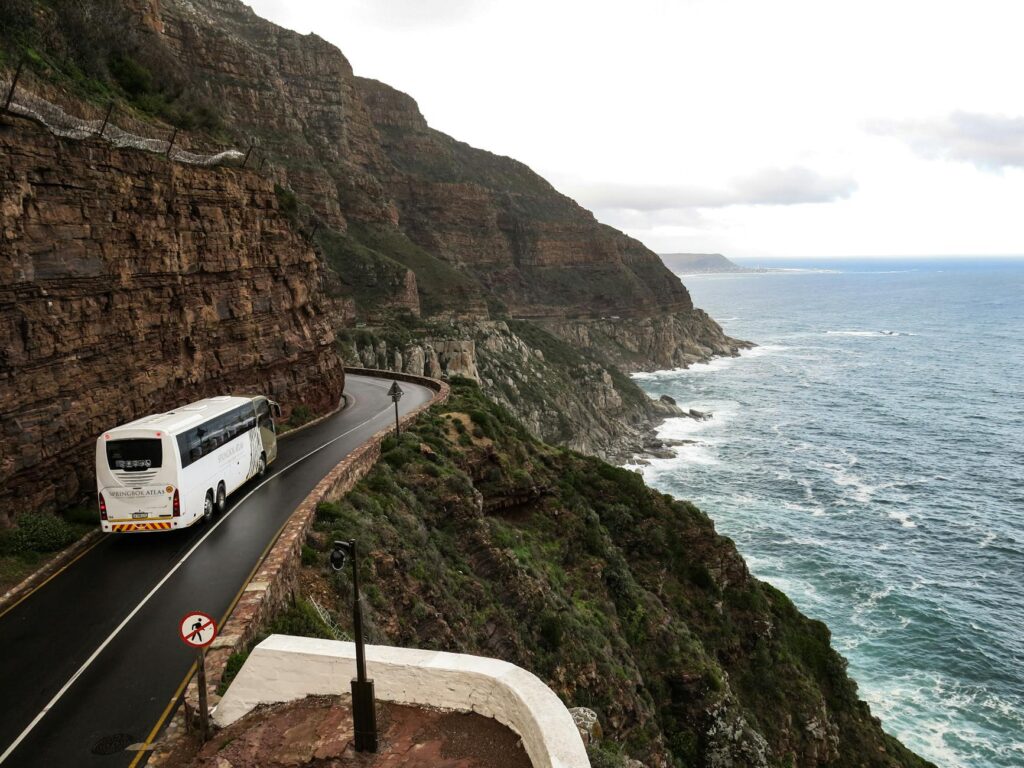
But a car is a genuine unlock for weekend trips — the Cape Point loop, Stellenbosch wine country, Hermanus whale season, the West Coast — and for accessing Table Mountain trailheads early without waiting for an Uber driver to find a remote car park. The right move for most nomads is to rent a car for the weekends only and Uber the rest of the time.
Here is the honest guide.
When you need a car
You need a car for:
- Day trips to Cape Point, Stellenbosch, Hermanus, Langebaan, Hout Bay (Uber works but is expensive for half-day trips)
- Sunrise hikes (Lion’s Head, Platteklip Gorge) where you start before Uber drivers are active
- Moving between multiple neighbourhoods in one day (Kalk Bay lunch, Constantia wine tasting, Sea Point dinner)
- Transporting bulky items (surfboards, bikes, beach gear)
- Remote Airbnb locations up in the mountain or in Hout Bay
You do not need a car for:
- Living in Sea Point, Green Point, CBD, Gardens, Tamboerskloof, Woodstock, or V&A Waterfront day-to-day
- Coworking commutes (always Uber, always cheaper)
- Restaurant dinners (Uber lets you drink)
- Grocery runs (Uber or walk)
- Most solo trips and nights out
Work out your month in advance. If you have fewer than 4 to 6 days of car-required activities, a weekend-only rental pattern is the right answer. If you have more, a monthly long-term rental starts to make sense.
The rental companies that actually work for nomads
1. Rentalcars.com (aggregator)
Rentalcars.com is the aggregator most nomads use. Compares prices across Avis, Budget, Hertz, Europcar, First Car Rental, Thrifty, and local operators. Usually finds the cheapest rate for your dates. Filter for “collection at Cape Town Airport” and book in advance — rates rise sharply inside 7 days.
2. Discover Cars (aggregator)
Discover Cars is the other big nomad-friendly aggregator. Often shows slightly different inventory and prices to Rentalcars. Worth checking both before you book.
3. First Car Rental
First Car Rental is the local-to-South-Africa brand that consistently undercuts the international chains by 20% to 30%. The fleet is smaller but well-maintained. Counter at Cape Town Airport and at V&A Waterfront.
4. Pace Car Rental
Pace Car Rental is a Cape Town local that specialises in long-term rentals (1 month and up). Our pick if you want a car for the full month at a flat rate that beats all the chain rates.
5. Tempest
Tempest is an affordable mid-tier option. Reliable, slightly cheaper than Avis and Europcar, similar fleet.
6. Avis, Europcar, Hertz, Budget
The international chains. Reliable, full airport presence, support in English, 24-hour roadside assistance, and consistently 15% to 40% more expensive than the local alternatives. Worth the premium if you want guaranteed support in a breakdown or if your home country loyalty points cover the rental.
Skip: the smallest local operators you have never heard of. The car may be fine but the customer service is not in English, the insurance terms are often suspect, and breakdown coverage is limited.
The hidden insurance trap
Here is the honest version. Every rental car in South Africa comes with a “standard waiver” that still leaves you liable for R10,000 to R80,000 in the event of a crash, theft, or windscreen damage. The rental company will call this “damage excess” or “own contribution” and it is buried in the contract.
The two ways out:
Option 1: credit-card rental insurance. Visa and Mastercard platinum and higher cards often include rental car CDW as a benefit if you pay for the rental on that card. Check your card’s specific benefits — most cover South Africa. This is the cheapest option if you qualify.
Option 2: buy the “super waiver” from the rental company. Adds R150 to R400 per day and reduces your excess to zero. Expensive but bulletproof. Always worth it on a short rental because one windscreen chip costs more than the super waiver for a full week.
Option 3: third-party rental excess insurance. Companies like iCarhireInsurance and RentalCover.com sell daily excess insurance for US$5 to $8 per day that covers you up to €5,000 to €8,000. Buy this if your credit card does not cover South Africa and you want to avoid the rental company’s marked-up super waiver. Caveat: you pay the rental company excess first, then claim it back from the third-party insurer, so have the credit facility ready.
Never rent a car in South Africa with only the standard waiver if you cannot afford the R80,000 excess. It is the single most common financial surprise for visiting nomads.
Typical prices (April 2026)
Short-term (3 to 7 days), economy car (Polo, Yaris, Picanto):
- Low season (May to August): R400 to R700 per day
- High season (December to February): R650 to R1400 per day
- Plus super waiver: add R200 to R350 per day
- Plus fuel: R18 to R22 per litre, roughly R300 to R600 per week depending on driving
Long-term (1 month), economy car:
- Low season: R9000 to R14,000 per month all-in
- High season: R15,000 to R25,000 per month all-in
Collection fees:
- Airport collection is sometimes subject to a fee of R150 to R300 on top of the daily rate
- V&A Waterfront collection is usually free
- Out-of-town drop-off (to Joburg, etc.) is typically R3000 to R8000
Driving in Cape Town
You will drive on the left. International driving licences are accepted for 6 months. Most traffic signs are in English. The main roads in the nomad neighbourhoods are well-maintained.
Things to know:
- Taxis. The minibus taxis (16-seater white minibuses) are a core part of the local transport network. They stop anywhere, pull out unexpectedly, and signal by hand gesture rather than indicators. Leave them the space they need and you will be fine. Do not try to out-drive them.
- Load shedding and traffic lights. Robots (traffic lights) lose power during load shedding. Treat a dark robot as a 4-way stop. Priority is to the driver who stopped first, then to the right.
- Speed limits. 60 km/h urban, 80 km/h on arterials, 100 km/h on non-freeway rural roads, 120 km/h on freeways. Enforcement is camera-based, and cameras are in fixed locations clearly marked by road signs.
- Parking. Cape Town has a paid street parking system. Parking attendants in yellow vests will ask for R5 to R20 when you return to your car. This is an informal tipping system rather than enforcement — the R10 to R15 is customary. Mall and restaurant parking is usually free.
- Safety. Do not leave valuables visible in a parked car. Lock all doors. Park in well-lit, supervised areas at night. This is standard SA driving hygiene.
The petrol network
Petrol (gasoline) is sold at full-service stations only in South Africa. You do not pump your own. The attendant fills up, cleans the windscreen, and checks your oil. Tip R5 to R10. Card payment is standard; cash is accepted. Major petrol brands: Shell, BP, Engen, Caltex, Total, Sasol. All are interchangeable.
Prices fluctuate monthly based on the government-regulated fuel price. In April 2026 unleaded 95 is around R22 per litre.
When to Uber instead
Do the Uber-vs-rental maths at the start of your trip:
- 5 day trips + 2 airport transfers (each at R250 to R400): roughly R3000 to R5000 in Ubers
- 5 day trips by rental + weekend car: roughly R4000 to R7000 all-in (3 day rental + super waiver + fuel)
If your usage is under 5 day trips and 2 transfers, Uber wins. If it is over, the rental wins. Do not default to “I need a car” without running the numbers.
The verdict
Most Cape Town nomads should rent a car on weekends only. Use Rentalcars.com or First Car Rental, add the super waiver unless your credit card explicitly covers you in South Africa, book a week ahead for the best rate, and pick the car up at V&A Waterfront rather than the airport to skip the airport fee. For weekdays, Uber and Bolt are always cheaper, faster, and remove the load-shedding robot-hazard problem. Budget R3000 to R6000 per month for this hybrid pattern. That is roughly one-quarter of what a full-month rental would cost, and it covers the things a car is actually useful for.
—
Keep reading
- First 48 hours in Cape Town
- South Africa eSIM guide for nomads
- Cape Point and peninsula day trip
- Stellenbosch wine day trip
- Cape Town safety guide
Tools we trust
Partners we use and recommend, tested in Cape Town.
We may earn a commission on purchases made through these links, at no extra cost to you. We only recommend products and services we actually use.