South Africa’s constitution has prohibited discrimination on the basis of sexual orientation since 1996, and same-sex marriage has been legal nationwide since the Civil Union Act came into force on 30 November 2006. Joint adoption rights for same-sex couples were secured in 2002. Cape Town is where much of that legal history was organised, argued and won, and it remains the centre of LGBTQ+ life in the country. This guide is for queer digital nomads weighing a move, a long stay or a first visit. It covers the current scene, the organisations doing the work in 2026, and an honest read on which parts of the city feel relaxed.
The legal reality
The baseline matters, because it shapes daily life more than any bar listing. Section 9 of the Constitution forbids discrimination on the grounds of sex, gender and sexual orientation, and binds both the state and private parties. Same-sex couples can marry under the Civil Union Act, adopt jointly, access IVF and surrogacy, and enjoy the same spousal rights as opposite-sex couples in tax, inheritance and immigration. Trans people can apply to change their legal gender marker under the Alteration of Sex Description and Sex Status Act.
In practice this means a queer couple renting a flat in Sea Point or registering with a GP is legally protected in a way that is still unusual on the continent. The law does not guarantee warmth everywhere, but the floor is higher than visitors often expect.
De Waterkant and the historic gay village
De Waterkant, the small grid of cobbled streets and Cape Dutch cottages between the V&A Waterfront and the City Bowl, has been the recognisable gay village since the 1990s. It is still the place where most of Cape Town’s dedicated queer nightlife sits, though the scene is smaller than it was a decade ago. Several long-standing venues have closed, including the camp drag-dinner restaurant Beefcakes, which is no longer operating. What remains is more concentrated and, in some ways, more interesting.
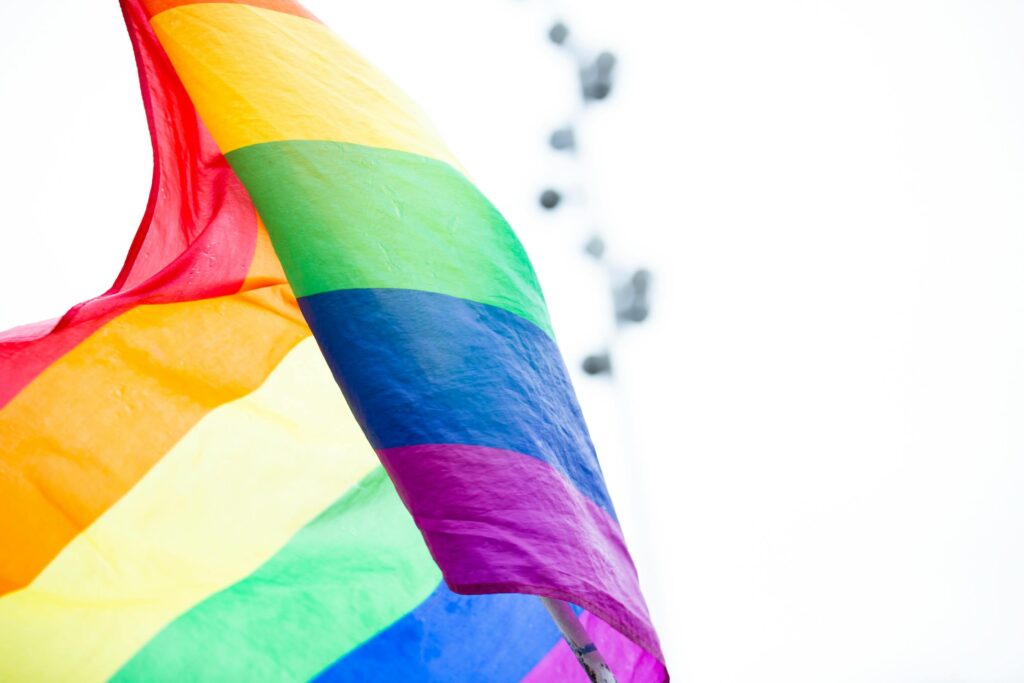
Walk up Somerset Road from the Waterfront and you are in it: rainbow-flag-lined pavements, the Cape Quarter, a handful of bars, cafes and guesthouses within easy walking distance of each other. During Pride week the whole neighbourhood effectively becomes the parade route.
The current scene: bars, clubs and cafes
A few venues anchor the nightlife in 2026:
- Crew Bar, 30 Napier Street, De Waterkant. One of the longest-running gay bars in the city, closed briefly and now back open. Dance floor, cocktails, later-night energy on weekends.
- Zer021 Social Club, 74 Waterkant Street. A larger club venue with a dance floor, rooftop and drag programming. The main late-night destination in the village.
- Cafe Manhattan, Waterkant Street. The village’s long-running gay-owned cafe and restaurant, good for a daytime meet, a first date, or lunch between meetings.
- Pink Panther, a smaller cocktail spot that has cycled through formats and still draws a crowd on weekends.
Beyond the village, plenty of bars and restaurants across the City Bowl, Sea Point and Woodstock are queer-owned or routinely mixed, without being marketed as gay venues. Much of queer Cape Town’s social life in 2026 happens in spaces that are simply normal, not labelled.
Coworking is similar. Workshop17, Inner City Ideas Cartel and Neighbourgood all host mixed, queer-friendly day-pass crowds without making it a marketing point. If you want a more explicit community feel, the networking nights around Pride week and MCQP are where you will meet remote workers.
Annual events worth planning around
Three dates drive the calendar:
Cape Town Pride runs for roughly three weeks in February, building to the Pride Parade and Mardi Gras. In 2026 the festival opened on 5 February and the parade ran on Saturday 28 February, starting at 11am on Alfred Street in De Waterkant, moving along Somerset Road through Green Point to the Green Point Track for the main stage and after-party. The parade is free and open to all. Cape Town Pride is smaller and more community-focused than Johannesburg Pride, and for many residents that is the point.
Mother City Queer Project (MCQP) is the costume party the city is known for internationally. It started in 1994 as a themed party celebrating the inclusion of sexual orientation in the new constitution, and has run most Decembers since. The theme changes each year, the dress code is the entire event, and the venue shifts. If you are in Cape Town in December, it is worth planning your wardrobe around it.
Pride month programming across bars, galleries and community spaces fills out February with panel discussions, film screenings, quieter community events and sport meets. The Cape Town Pride website publishes the full programme each January.
The historic Out in Africa South African Gay and Lesbian Film Festival ran from 1994 to 2018 and is no longer operating, so treat older articles that still list it with caution. Queer film programming now tends to appear inside broader festivals and through one-off screenings at the Labia and the Bioscope.
Community organisations doing the work
If you want to plug into something substantive, these are the groups to know:
- Triangle Project (triangle.org.za), founded in 1981, is one of the oldest and largest LGBTI organisations in South Africa. Based in the Western Cape, it runs sexual health clinical services, counselling, support groups, a helpline (021 712 6699, open 1pm to 9pm daily), court support for survivors of hate crimes, and public education. Volunteers and visitors are welcome.
- Gender DynamiX, established in 2005, is the first Africa-based public benefit organisation focused solely on the transgender and gender-diverse community. It advocates on legal reform, healthcare access and education, and its Cape Town offices host community meetings including SistaazHood, a long-running group for trans women, many of them sex workers and previously homeless.
- Ivan Toms Centre for Health in Woodstock is the birthplace of Health4Men, the national Anova Health Institute programme for men who have sex with men. It offers free HIV screening and treatment, PrEP, STI care and mental health support in a clinical space built specifically for MSM patients.
- Good Hope MCC, the Cape Town congregation of the Metropolitan Community Church, is an LGBTQ+-affirming Christian community that meets at Central Methodist Church on Greenmarket Square and online. For anyone who wants a spiritual home that is explicit about inclusion rather than quietly tolerant, this is the main one.
- Inclusive and Affirming Ministries (IAM) works across denominations to make South African churches welcoming to LGBTQ+ people, and is a useful contact if you are navigating a faith community here.
Gender-affirming healthcare is available in the public system at Groote Schuur Hospital’s Departments of Psychiatry and Endocrinology, and Gender DynamiX can help with referrals. Private care is available through a small number of GPs and endocrinologists in the Southern Suburbs and City Bowl who work with the trans community regularly.
Safer spaces by neighbourhood
This is where honesty matters. Cape Town is one of the safer cities in sub-Saharan Africa for LGBTQ+ people, but it is not a uniform experience and it is not Berlin.
Atlantic Seaboard (Sea Point, Green Point, Mouille Point, De Waterkant, Bantry Bay, Clifton, Camps Bay) is where most queer residents and visitors feel most relaxed. Clifton Third Beach has been an unofficial gay beach for decades. Public affection at restaurants, on the Sea Point Promenade, at Oranjezicht market and around De Waterkant is unremarkable.
City Bowl (Gardens, Tamboerskloof, Oranjezicht, Bo-Kaap edges) is similar: queer-owned businesses on Kloof Street, mixed coworking spaces, and a broadly easy daytime experience.
Southern Suburbs (Observatory, Woodstock, Salt River, Rosebank, Rondebosch, Newlands) ranges from strongly queer-friendly around Obs and Woodstock, where Ivan Toms and much of the activist community are based, to simply normal in the leafier suburbs.
Wind further out and the picture gets more variable. Parts of the Cape Flats, the northern suburbs and some townships are less forgiving, and hate crimes against LGBTQ+ people, particularly Black lesbians and trans women, remain a documented problem in South Africa. This is not about avoiding Black or working-class areas, which is both wrong and impractical. It is about reading the room: the organisations above are the people to ask for local context before events or visits outside the central zones.
The same judgement calls you would make as a queer traveller in any major city apply here. Public affection in Sea Point is fine. Walking between bars in De Waterkant at 2am is fine. Holding hands on a minibus taxi route at night you do not know is a judgement call.
Meeting people: how community actually forms
Dating apps work the way they do anywhere else. Grindr, Scruff, HER and the mainstream apps are all active in the city. The more useful question for a nomad is how to meet people beyond apps:
- Cape Town Pride week, even if you only come for a long weekend. The community events schedule is where you meet organisers, not just partygoers.
- Volunteer days with Triangle Project or Gender DynamiX. Both welcome short-term volunteers and it is a fast way to meet people doing serious work.
- Sport. Cape Town has mixed tag rugby, queer-friendly running groups on Sea Point Promenade, yoga studios on Kloof Street and bouldering at CityROCK. Blight Rugby Club was founded in 2011 specifically to make team sport accessible to gay players.
- Good Hope MCC for anyone who wants a community space that is not built around drinking.
- House parties and dinners. Cape Town’s queer social life runs on private gatherings. Get into one circle and the rest follows.
Travel and accommodation specifics
For short-stay nomads, De Waterkant and Green Point are the easiest base: walkable to the bars, to Sea Point Main Road, to the Waterfront and to the MyCiTi into the CBD. Most guesthouses in the village are explicitly gay-friendly and several are gay-owned. Sea Point, Tamboerskloof and Oranjezicht also work well and tend to be cheaper than the Waterfront strip.
Check-in for couples at guesthouses across the Atlantic Seaboard and City Bowl is a non-event. You do not need to pre-disclose your relationship. If you want explicit reassurance before booking, look at Cape Town Pride’s accommodation partner list or misterb&b.
A first-week CTA for queer nomads arriving
If you land this week, five moves will plug you in faster than anything else:
- Walk De Waterkant on your first Friday evening. Start at Cafe Manhattan for dinner, drink at Crew Bar, end at Zer021 if you want a dance floor. You will recognise the shape of the village by the end of the night.
- Put the next Cape Town Pride parade date in your calendar (cptpride.org publishes each year’s programme in January) and plan at least one weekend around it if you are here in February.
- Email Triangle Project at info@triangle.org.za or call the helpline on 021 712 6699 if you want a community orientation beyond the nightlife. Ask about upcoming events, volunteer days and support groups.
- Find one non-bar regular thing: a yoga class at Yoga Spirit on Kloof, a Parkrun at Green Point, a Sunday at Good Hope MCC, or a weekday coworking day at Workshop17. Pick the one that sounds least like a chore and commit to it for a month.
- Follow MambaOnline and Cape Town Pride on Instagram for the short-notice stuff that never makes it onto Google.
Cape Town’s queer community is smaller than London’s or New York’s and you will feel that. What it has instead is a longer activist lineage, stronger legal ground to stand on, and a social scene that you can learn the shape of in a few weeks rather than a few years. If you want to meet people, put yourself in one or two rooms a week and the city will do the rest.
—
Related reading:
- Digital nomad community in Cape Town
- Cape Town neighbourhoods for digital nomads
- First 48 hours in Cape Town
- Connect pillar
External resources:
- Triangle Project, Cape Town’s oldest LGBTI NGO
- Cape Town Pride, official festival and parade info
- MambaOnline, LGBTQ+ South Africa news
Tools we trust
Partners we use and recommend, tested in Cape Town.
We may earn a commission on purchases made through these links, at no extra cost to you. We only recommend products and services we actually use.