KIT REVIEW
Peak Design Travel Backpack 45L Review: The Premium Pick for Nomads Who Shoot
BaseCPT Verdict
What It Is and Who It’s For
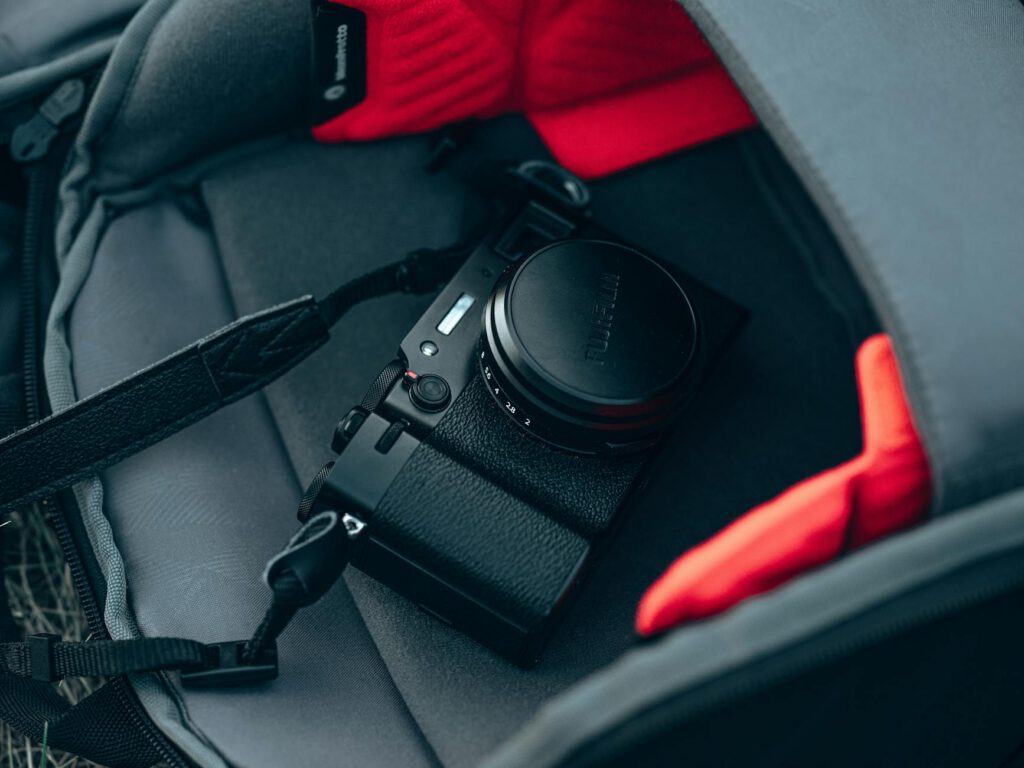
The Peak Design Travel Backpack 45L is a premium travel bag built by a company that started in camera gear. That origin story matters — this is the only major travel backpack designed from day one to carry both camera equipment and everything else a travelling professional needs.
This is not a backpack for everyone. At roughly R7,500 landed in South Africa, it costs more than the Tortuga Outbreaker and Osprey Farpoint combined. The buyer is a specific person: a digital nomad who also shoots photos or video, needs their camera gear accessible without unpacking the entire bag, and is willing to pay substantially more for design and build quality that borders on obsessive.
If you’re a content creator documenting Cape Town, a freelance photographer working remotely, or someone who carries a mirrorless camera alongside their laptop as a daily kit, this review is for you. If you just need a bag to haul clothes and a laptop, the Farpoint 40 or Outbreaker 45L will serve you better for far less money.
Key Specs
- Capacity: 35-45 litres (expandable)
- Weight: 2.05 kg (empty)
- Dimensions: 56 x 33 x 22 cm (compressed) / 56 x 33 x 25 cm (expanded)
- Laptop compartment: Fits up to 16-inch laptops
- Material: 400D nylon canvas shell with DWR coating
- Opening style: Full rear clamshell + side and top access
- Hip belt: Optional (sold separately, ~$50 USD / ~R900 ZAR)
- Price: ~$300 USD / ~R5,500 ZAR (+ shipping/duties, total ~R7,000-7,500)
What We Tested
Camera gear integration. We used the Travel Backpack with Peak Design’s Camera Cube inserts (sold separately, R1,200-2,400 depending on size) to carry a Sony A7IV body, two lenses (24-70mm f/2.8 and 85mm f/1.8), a small drone, plus a MacBook Pro 16-inch. The bag handled this configuration without issue.
The key test: pulling the camera out quickly while walking through Bo-Kaap or along the Sea Point Promenade. The side zip access lets you reach the camera cube without opening the main compartment, without putting the bag down, and without looking like you’re fumbling with gear in a public space. That last point matters in Cape Town — visible expensive camera gear in certain areas invites attention you don’t want.
The expansion system. The Travel Backpack compresses from 45L to 35L using exterior buckles. We tested both configurations. At 35L compressed, the bag meets virtually every carry-on requirement globally, including SA domestic airlines. At 45L expanded, it’s pushing the limits on Kulula and FlySafair but still fits in overhead bins.
The expansion is genuinely useful for the Cape Town nomad lifestyle. Compressed for a weekend trip to Franschhoek. Expanded when relocating between Airbnbs with all your gear. This flexibility is something neither the Outbreaker nor the Farpoint offers.
Build quality over three months. Peak Design’s materials and construction are a clear step above every other travel backpack we’ve tested. The 400D nylon canvas feels like it belongs on professional luggage, not a backpack. Zippers are weatherproof and move with the kind of smoothness you’d expect from a bag at this price point. After three months of Cape Town use — MyCiTi buses, Uber boots, cafe floors, beach sand, winter rain — the bag shows zero signs of wear. None.
Daily use as a work bag. The Travel Backpack works as a daily bag in a way the Outbreaker doesn’t quite manage. Remove the camera cubes, and you have a 45L bag with a clean main compartment, a dedicated laptop sleeve, and top-pocket access for small items. Walking into a coworking space in Woodstock or a meeting at a Camps Bay hotel, the bag looks professional rather than “backpacker.”
What’s Good
Camera access without exposure. The side zip and modular cube system means you can pull a camera, swap a lens, and stow everything in under 30 seconds without opening the main compartment. In Cape Town, where camera gear visibility is a security consideration, this discrete access is a genuine practical advantage.
The expansion system solves two problems at once. Compressed for flights, expanded for moves. No other bag in this category offers this range. The 10L difference between compressed and expanded states is roughly the volume of a large packing cube — that’s meaningful.
Build quality justifies the premium. Every material, every zipper, every strap on this bag is best-in-class. The weatherproof zips handled a Cape Town winter storm without letting moisture through. The 400D nylon canvas resists scuffs and abrasion in ways that the Outbreaker’s 900D polyester and the Farpoint’s 450D polyester don’t match. This is a bag you’ll use for years.
It looks like a professional bag, not a backpacker bag. The Travel Backpack has a clean, architectural aesthetic in either black or sage. Walk into a client meeting, a coworking space, or a restaurant and it reads as a premium accessory rather than travel gear. For nomads who work with clients in Cape Town, this visual impression matters.
Multiple access points are genuinely useful. Top pocket for phone, passport, and wallet. Side zip for camera cube. Full rear clamshell for packing and unpacking. You rarely open the main compartment during a travel day because everything you need in transit is accessible from other openings.
MagLatch top closure. The magnetic clasp system on the top opening is fast, one-handed, and satisfying to use. It sounds like a small thing until you’ve fumbled with buckles on other bags while holding a coffee on Long Street.
What’s Not
The price is hard to justify without camera gear. At R7,000-7,500 landed, plus R1,200-2,400 for camera cubes, the total investment approaches R10,000. If you don’t carry camera gear, you’re paying a massive premium for build quality and aesthetics over the Farpoint 40 (R3,000) or Outbreaker 45L (R5,500). The camera integration is what makes the price make sense.
You can’t buy it in South Africa. Peak Design has no official SA retail presence. You’re ordering from peakdesign.com or Amazon, paying international shipping, and potentially getting hit with customs duties. The total landed cost is unpredictable, and returns are essentially impossible from Cape Town.
The hip belt is sold separately. On a $300 bag, charging an additional $50 for the hip belt feels wrong. The Outbreaker and Farpoint both include theirs. For a loaded bag weighing 10+ kg, you need a hip belt. Budget for it.
At 2.05 kg empty, it’s still heavy for SA domestic flights. Lighter than the Outbreaker but heavier than the Farpoint. The same weight budget tension applies on FlySafair and Kulula, though the expansion system helps — compress it, pack lighter for short flights, expand for longer relocations.
The internal organisation relies on accessories. Out of the box, the main compartment is essentially a big open space. Peak Design sells packing cubes, tech pouches, wash pouches, shoe pouches, and camera cubes — all separately, all at premium prices. The bag is designed as a modular system, which is intellectually satisfying but expensive in practice. A full set of Peak Design accessories adds R3,000-5,000 to the total cost.
The 400D nylon canvas picks up lint. A minor gripe, but the fabric surface attracts lint, pet hair, and dust in a way that the Outbreaker and Farpoint don’t. In an Airbnb with a cat, the bag looks fuzzy within a day.
The Verdict
The Peak Design Travel Backpack 45L is the best travel backpack we’ve tested, and also the hardest to recommend. It’s the best because the build quality, design intelligence, and camera integration are unmatched. It’s hard to recommend because the total system cost — bag, hip belt, camera cubes, packing accessories — can exceed R10,000, and you can’t buy or try it locally.
For nomads who carry camera gear and can absorb the cost, there’s nothing else in this category that competes. The side-access camera system alone justifies the purchase if you’re shooting in Cape Town regularly.
For everyone else, the Farpoint 40 or Outbreaker 45L delivers 80% of the travel backpack experience at 40-50% of the cost. The Peak Design is a better bag. The question is whether it’s enough better to justify the price difference for your specific use case.
Quick Reference
| Price | ~$300 USD / ~R5,500 ZAR (+ shipping/duties, ~R7,000-7,500 landed) |
| Where to buy | peakdesign.com, Amazon (no SA retail) |
| Best for | Nomads who carry camera gear, content creators, premium-focused buyers |
| Not ideal for | Budget-conscious nomads, non-photographers, anyone who wants to buy locally |
| Rating | 4.5 / 5 |