KIT REVIEW
Romoss Sense 8P+ 30000mAh Review: The Budget Power Bank That’s Actually on Takealot
BaseCPT Verdict
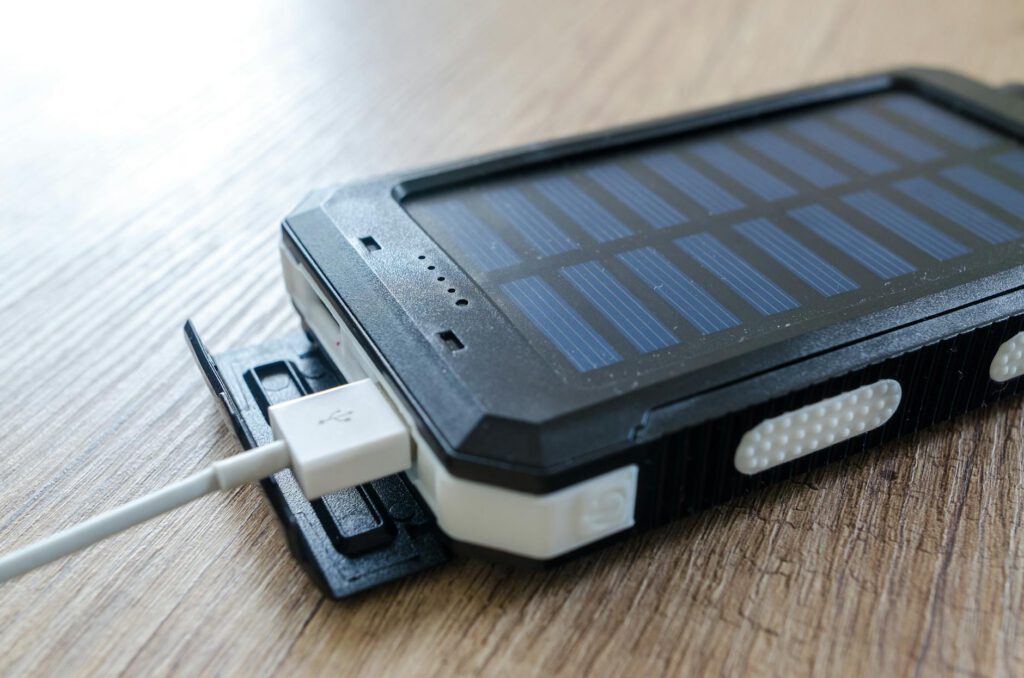
The Romoss Sense 8P+ is a 30,000mAh power bank with 18W fast charging, available on Takealot for between R500 and R700. It’s for digital nomads and remote workers who need dependable phone and tablet charging without spending R2,000+ on a premium bank. If you’re watching your rand and need something you can order today with next-day delivery in Cape Town, this is the one to look at first.
Key Specs
- Capacity: 30,000mAh / 111Wh
- Max output: 18W (USB-A QC 3.0), 18W (USB-C PD)
- Ports: 2x USB-A, 1x USB-C, 1x Micro-USB (input only)
- Weight: ~540g
- Dimensions: 162 x 80 x 26mm
- Charging input: 18W USB-C or Micro-USB
- Display: LED indicator (4 dots, not a percentage screen)
- Price: R499–R699 on Takealot (price fluctuates; frequently on sale)
What We Tested
The Romoss Sense 8P+ doesn’t claim to be a laptop charger or a load shedding power station. We tested it for what it actually is: a high-capacity phone and tablet bank at a budget price point. Four weeks of daily use in Cape Town.
Phone charging endurance. Starting from a full charge on the Romoss, we tracked how many complete phone charges we got before the bank died. With an iPhone 15 Pro (3,274mAh battery): 5.5 full charges. With a Samsung Galaxy S24 (4,000mAh battery): 4.5 full charges. The rated 30,000mAh never translates directly to device charges due to voltage conversion losses, but these numbers are solid for the price.
Charging speed. The 18W USB-C PD output charged an iPhone 15 Pro from 20% to 80% in about 50 minutes — not flagship-fast, but faster than the 5W charger Apple includes in the box. For Samsung devices supporting Quick Charge 3.0 via the USB-A port, similar results: 20% to 80% in roughly 45 minutes. Above 80%, charging slows significantly as the phone’s battery management takes over. That’s normal behaviour, not a Romoss limitation.
Load shedding phone lifeline. During a 2.5-hour Stage 4 outage, we kept a phone, wireless earbuds, and a Kindle charged from the Romoss. The bank barely moved from 90% to 75%. For keeping your communication devices alive during load shedding, this has capacity to spare.
Can it charge a laptop? (Sort of.) We tried. The 18W USB-C output will trickle-charge a MacBook Air M2 — very slowly. Over an hour, it added about 12% to the laptop battery. That’s technically functional but practically useless for real work. If you need laptop charging, the Romoss isn’t the product. Look at the Baseus Blade (65W) or Anker 737 (140W) instead.
Router backup via 12V step-up cable. Connected to a fibre router via a 12V step-up USB cable, the Romoss ran the router for approximately 8–9 hours. That covers multiple load shedding slots back-to-back. At this price, buying a Romoss and a R150 step-up cable specifically as a dedicated router backup (total: ~R700–R850) is one of the most cost-effective load shedding solutions available.
Recharge time. This is where budget pricing shows. From empty to full via 18W USB-C takes roughly 6–7 hours. With the older Micro-USB input, even longer. You can’t rapid-cycle this bank between load shedding slots. Plug it in overnight and keep it topped up as a habit.
What’s Good
The price-to-capacity ratio is unmatched locally. At R500–R700 for 30,000mAh on Takealot, nothing else comes close in South Africa. The nearest equivalent would be a generic no-name brand at similar prices but without any warranty support or quality consistency.
Takealot availability and returns. This is stocked consistently. You can order it on a Monday morning and have it by Tuesday in Cape Town. If it’s faulty, Takealot’s returns process is straightforward. For a nomad who just arrived and needs power backup today, this accessibility matters enormously.
30,000mAh handles a weekend away. Heading up the West Coast or down to Hermanus for a long weekend? The Romoss will keep two phones charged for 2–3 days without needing a wall outlet. For domestic travel within South Africa — where accommodation power reliability varies — this capacity provides genuine peace of mind.
Dedicated router backup at minimal cost. Pair it with a 12V step-up cable and you’ve built a purpose-built router UPS for under R900. Leave it plugged into the router’s vicinity, and your fibre stays alive through any load shedding stage.
It’s simple. Two USB-A ports and a USB-C port. No apps, no Bluetooth, no settings to configure. Plug in, charge. The four-LED indicator tells you roughly how full it is. Not elegant, but functional.
What’s Not
18W output won’t satisfy laptop users. This is a phone and tablet power bank, full stop. The USB-C PD output is limited to 18W, which is below the threshold for meaningful laptop charging. If your primary concern is laptop power, this isn’t the product — and no amount of mAh capacity changes that.
The 4-LED indicator is vague. Each LED represents roughly 25% of capacity. The difference between “3 LEDs” and “2 LEDs” is a massive range. Coming from the Anker 737’s precise percentage display or even the Baseus Blade’s digital readout, the Romoss feels like guessing. You learn to work with it, but you never know exactly where you stand.
6-7 hour recharge time is slow. If you drain it completely, you need an overnight charge to get it back to full. During heavy load shedding schedules with limited grid time between slots, this can be a problem. The solution is to keep it topped up habitually rather than draining and recharging fully.
540g is heavy for what it does. The Romoss weighs nearly as much as the Anker 737 (630g) while delivering a fraction of the output power. The 30,000mAh capacity demands physical battery cells, and those cells have weight. For daily backpack carry focused on phone charging, a 10,000mAh slim bank at half the weight might be more practical — but then you lose the multi-day endurance.
Build quality is adequate, not premium. The plastic shell feels like a R500 product. It’s not fragile, but it doesn’t inspire the same confidence as the Anker’s aluminium construction. After four weeks, the surface showed scuff marks and a minor scratch near the USB-C port. It works, but it won’t age gracefully.
Micro-USB input in 2026. The fact that this still has a Micro-USB input port (alongside USB-C) tells you it’s not a recent design. The USB-C input works fine, so this is mostly an aesthetic complaint — but it signals that Romoss hasn’t refreshed the internal design recently.
The Verdict
Buy it if: You need a reliable, high-capacity phone charger available on Takealot at a budget price. It’s the right first purchase for a nomad landing in Cape Town who needs immediate power backup without research paralysis. Especially effective as a dedicated fibre router backup paired with a 12V step-up cable — at a total cost under R900, it’s the cheapest functional load shedding internet solution available. Also solid for weekend trips where you want multi-day phone charging without packing a wall charger.
Skip it if: You need laptop charging (get the Baseus Blade or Anker 737), you want precise battery level readings, or weight is a primary concern for daily carry. For lighter daily phone charging, a 10,000mAh bank in the R300–R400 range is more practical in your pocket.
Quick Reference
| Price | R499–R699 |
| Where to buy | Takealot (consistently in stock), Game, Incredible Connection |
| Best for | Budget phone/tablet charging, dedicated router backup |
| Skip if | You need laptop charging or precise battery monitoring |
| Rating | 3.8 / 5 |