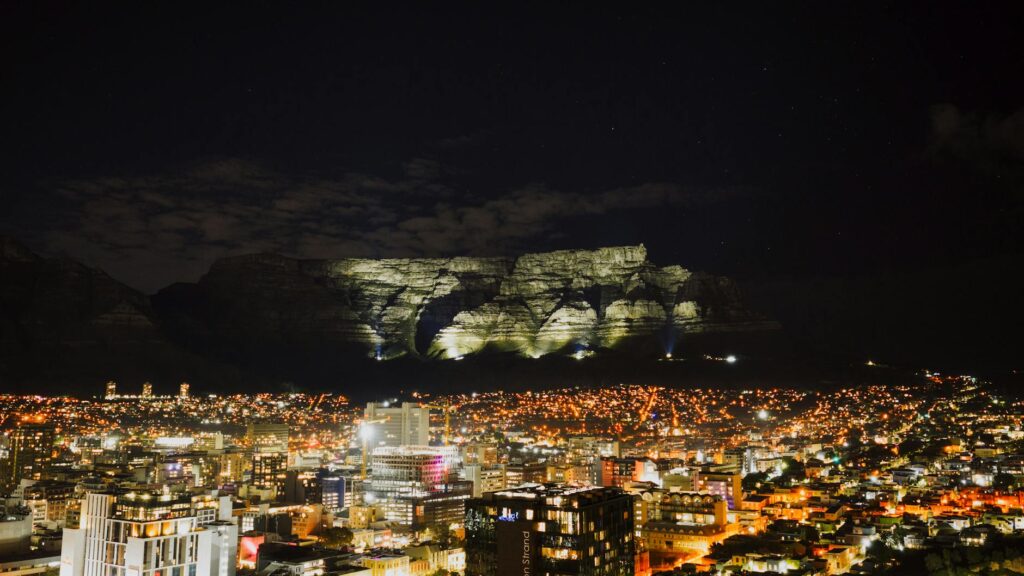
Most Cape Town content reads like tourism board marketing. Postcard sunsets, penguin photos, “paradise found” headlines, a five-line disclaimer about safety, then back to the Table Mountain cable car.
We won’t do that here.
Cape Town is worth the move. That’s why we built BaseCPT. But the city has six honest trade-offs that every digital nomad should understand before booking a flight. None of them are deal-breakers. All of them reshape how you live and work if you’re here for more than a weekend.
This is the guide we wish existed before we moved. No sugar-coating. No paranoia. Just what actually happens, how much it matters, and what to do about it.
1. Load shedding: the power cuts are real, and planning your work around them is the South African national sport
Load shedding is South Africa’s rolling power-cut system. When the grid can’t supply enough electricity, Eskom (the state utility) rotates blackouts across geographic blocks to prevent a total collapse. Your area gets cut on a published schedule, usually for 2 to 4 hours at a time, sometimes twice a day.
Stages go from 1 (least disruptive, roughly 2 hours per day) to 8 (theoretical worst case, rarely triggered). In a bad week you might see stage 4 or 5. In a good month you won’t see any at all.
What this means for your workday:
Your laptop runs fine on battery. Your router and fibre modem do not. When the power goes, your Wi-Fi goes with it. Unless you’ve planned ahead, so does your Zoom call.
The good news: every serious coworking space and every half-decent café in the nomad-friendly neighbourhoods runs on a generator or a UPS-plus-inverter combo. Truth Coffee, Deluxe, Haas, WorkShop17, Workshed, Spin Street — all of them stay online through stage 6. This is the single most important filter when picking where to work during a cut.
The better news: load shedding is predictable. Install EskomSePush on your phone. Type in your area. You’ll get a live feed of exactly when your slot is and a ten-minute warning before it hits. Plan your deep-work blocks outside your slot. Schedule calls during your off-slot hours. Do admin work through the cut at a café on a generator.
The best news: if you’re renting an Airbnb or a short-let in Sea Point, Green Point, Camps Bay, or the CBD, you’re probably already in a building with a backup generator or inverter system. Ask before you book. Most good hosts advertise “load shedding ready” now because they know it moves the booking needle.
What you should buy in the first week: a 600Wh portable power station like an EcoFlow River 2 Max or a Jackery 500. It’ll keep your router, laptop, and a lamp alive through any stage-6 cut for about R8,000-R10,000. Cheaper than missing a single client call.
Realistic expectation: you will lose 2 to 6 hours a week to cuts during bad months. You will lose zero hours during good months. You will plan around it within a fortnight and then forget it was ever a thing.
2. Safety: the picture is more nuanced than the headlines, and neighbourhood choice matters more than you think
Cape Town has a real crime problem. It also has entire neighbourhoods where thousands of people live, work, walk their dogs, and raise kids with no incidents year after year. Both things are true at the same time. Understanding which is which is the whole game.
The murder rate you see in international headlines reflects the Cape Flats townships, areas you will not go to and have no reason to visit. The gang violence that dominates coverage happens in Manenberg, Mitchells Plain, Khayelitsha, Delft. If you’re a nomad on a laptop looking for fibre and flat whites, these places are not on your route.
The neighbourhoods where you will actually spend time — Sea Point, Green Point, the Atlantic Seaboard, Camps Bay, Clifton, the City Bowl, the V&A Waterfront, De Waterkant, Woodstock (in parts), Observatory (in parts) — have distinct risk profiles. Daytime on the Sea Point promenade? Completely fine. Walking alone at night on a quiet side-street? Don’t. Leaving a laptop bag on a café table while you order? Don’t. Flashing a new iPhone at a traffic light? Don’t.
The specific things that actually happen to nomads:
- Phone snatching at traffic lights, especially on the M3 and Eastern Boulevard. Keep your phone out of sight when stopped.
- Opportunistic bag theft in cafés when you leave a seat unattended. Never leave a bag, ever.
- Car break-ins when anything visible is left on the seat. Empty your car. Every time.
- Walking home alone after dark in a quiet area. Uber or book a local ride. An Uber across the Bowl is R30 to R60.
The things that almost never happen to nomads:
- Violent muggings in Sea Point or the CBD during daylight.
- Anything, ever, inside a V&A Waterfront shopping complex or inside a major coworking space.
- Random attacks on tourists going about their day in nomad-friendly areas.
The practical shorthand: use the same habits you’d use in Barcelona, Medellín, or Mexico City, tuned slightly up. Don’t wear expensive watches. Don’t take shortcuts. Don’t walk alone at night. Keep your phone in your pocket. Use Uber or Bolt after dark. Lock your Airbnb’s armed response beam sensor when you sleep.
Most people who spend two or three months here have zero incidents. The ones who do are almost always the ones who ignore the obvious rules. Do not be that person.
For deeper coverage, see our Cape Town safety guide, which goes neighbourhood by neighbourhood with specific dos and don’ts.
3. The Cape Doctor wind: it’s funny until it’s not, and it reshapes your calendar
The Cape Doctor is Cape Town’s south-easter wind, named because it “blows the pollution out of the city.” In summer (November to March) it can run for three to five days at a stretch, reaching 40 to 60 km/h on the Atlantic Seaboard and sometimes more in exposed spots.
This sounds like a weather trivia bullet point. It is not. The Cape Doctor will reorder your week.
What it actually does:
- Closes outdoor activities. Table Mountain cableway stops running at anything above about 50 km/h. Sea Point Promenade becomes a dust tunnel. Kalk Bay stops fishing. Camps Bay beach is unswimmable (not because of the wind but because it whips up freezing Atlantic water).
- Kills your outdoor coworking plans. Any “work from a beachfront café” fantasy dies on a windy day. The umbrellas come down. The outdoor seating goes away.
- Makes you question your life choices. A week of strong south-easter is psychologically tough. Locals know this and plan around it.
What to do about it:
- Check the forecast on Windy.com a day ahead. Not Apple Weather — the granularity is wrong for Cape Town microclimates.
- On windy days, shift your plans inward. Work from inside a café, not the courtyard. Swap the outdoor hike for a gallery morning. Book lunch in a wind-sheltered spot like the Constantia wine valley, which is 10 km inland and often calm when the city is howling.
- Move neighbourhoods. Camps Bay, Sea Point, Green Point, and the Atlantic Seaboard get the full brunt. The City Bowl is slightly more sheltered. Kloof Street and Gardens are noticeably calmer. Muizenberg and Kalk Bay on False Bay often have completely different weather to the Atlantic side on the same day.
- Embrace it. The days after a strong Cape Doctor are some of the clearest, cleanest, most beautiful days you’ll ever see. The sky is bottle-blue. Table Mountain looks closer than it is. The air feels scrubbed.
Realistic expectation: in summer you’ll lose 8 to 15 days to strong wind. In winter the south-easter is replaced by the north-wester, which brings rain but is usually shorter-lived. Wind is a permanent feature of the Cape Town operating environment, not a bug.
4. Water scarcity: the 2018 Day Zero drought changed everything, and the habits stuck
In 2018 Cape Town came within weeks of being the first major global city to run out of municipal water. Reservoirs hit 13%. The city published a countdown to “Day Zero” when taps would be turned off and residents would queue at collection points.
It didn’t happen. A combination of emergency cuts, massive behaviour change, and an unusually wet winter saved the city. But the experience changed Cape Town permanently. The habits stuck.
What this means today:
- Two-minute showers are a point of civic pride. Most Airbnbs will have a “please keep showers short” sign. Take it seriously.
- Dual-flush toilets everywhere. Use the small flush when possible.
- Grey water reuse is common. Many houses collect shower runoff to flush toilets or water gardens.
- Dams are monitored publicly. Capetonians watch dam levels the way other people watch stock markets.
- Restrictions come back. In dry years the city re-introduces water limits. You may see “no bath, showers only” signs and per-person daily limits.
Practical advice:
- Don’t leave taps running. Ever.
- Reuse your hotel towels. The sustainability ask here is real, not greenwashing.
- Drink tap water. Cape Town tap water is safe, tested, and pleasant. No need for bottled.
- If you’re renting for a month or more, get a water bottle and refill. Bottled water is expensive and wasteful here.
- In very dry months, expect brief outages. Fill a 5L container in your kitchen as a buffer.
Realistic expectation: water scarcity is invisible most of the time but shapes the culture. You’ll adopt two-minute showers in week one and feel virtuous forever. In a bad year you might see restrictions. Day Zero-level crisis is unlikely to repeat soon but remains possible in a changing climate.
5. The housing hunt: cheap by global standards, complicated by local ones
Compared to Lisbon, Barcelona, Berlin, or any major US city, Cape Town accommodation is genuinely cheap. A nice one-bedroom Airbnb in Sea Point runs R12,000 to R25,000 per month (roughly $650 to $1,350). A decent short-let in Green Point or the City Bowl is similar. A shared house in Observatory or Woodstock can be half that.
But the housing hunt has quirks that trip up nomads.
What you need to know:
- Airbnb dominates the short-let market. Monthly discounts of 20% to 40% are common. Always filter for “at least one bathroom” (seriously, some listings share), “hot water,” and “load shedding backup.”
- Long-term leases (6+ months) are cheaper but harder to arrange as a foreigner. Most require a South African bank account, a recent utility bill, and references. Doable, but not for a two-month trip.
- Mid-term rentals (1 to 3 months) are the sweet spot. Look on Airbnb, Facebook Marketplace (“Cape Town short term rental” groups), and local agents like Short Stays CT or Capsol.
- Neighbourhoods matter a lot. Sea Point and Green Point are nomad-friendly, walkable, café-dense. Camps Bay is gorgeous but isolated. The CBD is energetic but quiet on weekends. Observatory and Woodstock are cheaper and more local but have real safety caveats after dark.
- Compound the wind check. Before booking a “stunning Atlantic Seaboard view” in summer, check which side the building faces. South-east facing = Cape Doctor in your face.
- Always verify backup power. Every listing should answer “is there a generator or inverter” clearly. If the host dodges the question, skip the listing.
Realistic expectation: your first Airbnb will be fine but not perfect. Your second will be great because you’ll have learned the local filters. Give yourself a week of flex on the first booking.
6. Bureaucracy and the remote-work visa grey zone
South Africa technically has a new “remote work visa” that was announced in 2024 and formally opened in 2025. In practice, most nomads arrive on a standard 90-day visitor visa (free for most Western passports on arrival) and extend once from inside the country. That gives you 180 days in a 12-month window, which is plenty for a long stay.
The remote work visa itself requires proof of a minimum income (currently around ZAR 1 million per year), a clean criminal record, medical cover, and a lot of paperwork. It’s worth it only if you’re staying for a year or more. For most nomads, the visitor visa route is faster and cheaper.
What to know:
- Don’t overstay. South African immigration takes this seriously. Overstaying even a few days can get you flagged and banned for 1 to 5 years.
- Extensions are done through VFS Global, not directly with Home Affairs. Book at least 30 days before your visa expires.
- Banking as a foreigner is hard. Most SA banks want a tax number (SARS TCS) and a proof of address before opening an account. For a short stay, skip it and use Wise or Revolut for ZAR conversions.
- SIM cards require a RICA (identity registration). Bring your passport. MTN, Vodacom, and Rain all have booths in the airport arrivals hall. Rain is the cheapest for data-only, MTN has the best coverage.
Realistic expectation: the paperwork side of moving to Cape Town is clunkier than you’d expect from a developed economy. Factor in a day of admin in week one, and another day if you extend your visa.
The honest verdict
Cape Town has real trade-offs. The power cuts are real. The crime stats are real. The wind is real. The water scarcity is real. The housing hunt is real. The bureaucracy is real.
And yet.
You will hike Table Mountain at sunrise and not remember the last time you felt this healthy. You will work from a café in Sea Point with a view of the Atlantic for R50 flat whites. You will eat Cape Malay curry in Bo-Kaap, swim with penguins at Boulders, and drink Chenin Blanc in Franschhoek on a Tuesday afternoon. You will meet other nomads from twelve countries in your first week. You will pay R28,000 all-in for a month of living that would cost three times as much in Lisbon.
The trade-off math is: six honest problems, all manageable with a week of onboarding, in exchange for one of the most beautiful cities on the planet at a fraction of the global cost.
Most nomads who come here for a month stay for three. Most who come for three stay for six. A surprising number never leave.
You just have to know what you’re walking into.
—
Further reading
- Staying safe in Cape Town — practical advice, not paranoia
- Load shedding in Cape Town, right now
- This week in Cape Town
- Weekend nomad picks
- Best cafés to work from in Cape Town
- South Africa digital nomad visa, explained
Tools we trust
Partners we use and recommend, tested in Cape Town.
We may earn a commission on purchases made through these links, at no extra cost to you. We only recommend products and services we actually use.