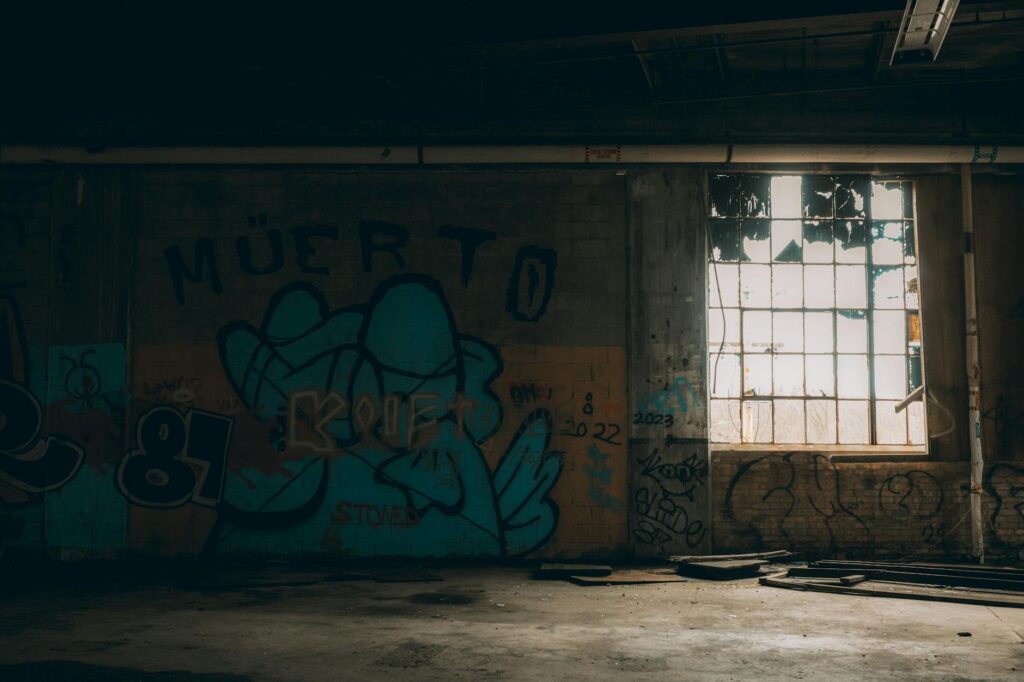
Salt River does not sell itself. Drive down Victoria Road from town and you will see a flat industrial grid of textile factories, panel beaters, a halaal butchery on the corner, and the back of a warehouse someone has painted in block colour. It is not pretty in the postcard sense. It is working. That is the point.
For a decade and a half the creative economy has been quietly moving into these buildings, one long lease at a time. Photographers who need a 200 square metre studio with a roller door. Furniture makers. A coffee roaster. A couple of ad agencies who wanted more space than CBD rents allow. The result is a neighbourhood that runs on two clocks at once: the factory shift clock and the creative studio clock, overlapping in the same streets.
We think of Salt River as the edge neighbourhood. The CBD feels corporate and residential-tower after hours. Woodstock has been gentrifying visibly since the early 2010s and now has a settled cafe-and-gallery layer. Salt River is the bit in between that never fully tipped. Some streets feel raw. Some feel like a Berlin side road in 2012.
For a digital nomad the question is whether that suits you. If you want a walkable evening village with restaurants spilling onto pavements, this is the wrong postcode. If you want cheaper rent than Gardens, a short Uber to anywhere you actually need to be, a working studio culture around you, and an honest industrial aesthetic you can live inside, Salt River is worth a serious look.
Where Salt River is
Salt River sits directly east of the CBD and directly west of Woodstock, bordered to the north by the N1 and to the south by the lower slopes of Devil’s Peak. Albert Road is the spine, running from the Woodstock side down toward the foreshore, and most of the buildings you care about as a nomad sit within four or five blocks of it.
The N1 bleed is real. Traffic noise carries through the northern end, especially at the Voortrekker Road junction, and in warehouse conversions without proper acoustic treatment you will notice it. South of Albert Road is quieter.
The Old Biscuit Mill sits just over the border in Woodstock, about a fifteen minute walk along Albert Road from central Salt River. We flag that because a lot of listings market themselves as “Salt River, next to the Biscuit Mill” when the Mill is technically Woodstock side. See our Woodstock neighbourhood guide for the other half of the picture, and the CBD and Gardens guide for what sits on the other side.
The daily rhythm
Salt River wakes up early and for work. By 07:00 the factories have opened their doors and the first coffee places are pulling shots for the people heading into studios. By 10:00 the neighbourhood has a particular quiet to it. Most of the creative tenants are indoors, heads down, and the street traffic is deliveries and trolleys. Lunch is brief and functional. The Albert Road end picks up again mid-afternoon when the studios break, and then drops off hard after 18:00.
Saturday mornings are the exception. The Neighbourgoods Market at the Old Biscuit Mill pulls a huge crowd in between about 09:00 and 14:00, and the overflow spills into the Salt River side streets. Worth knowing: the market is Woodstock side, not Salt River proper, but the traffic and parking pressure lands on both. Our Cape Town food markets guide has the wider list.
The textile factories still operating give the neighbourhood a texture that other gentrified pockets have lost. You will hear sewing machines through open windows. You will see bales of fabric being loaded at the kerb. It is a working neighbourhood first and a creative one second, and that order matters.
Getting around
Uber is the default and you should budget for it. A ride from central Salt River to the V&A is about R60 to R90 depending on time of day as of early 2026. To Sea Point is R80 to R120. To Kirstenbosch is R150 to R200. These are the trips you will actually take, so the maths on “cheap rent” has to include them.
The Salt River train station is on the Southern Line and in theory links you to Observatory, Rondebosch, Wynberg, and eventually Muizenberg. In practice we do not recommend the train for nomad use. Service reliability has been rebuilding slowly post 2020, and the station itself is not somewhere we would sit with an open laptop bag.
Walking to the CBD is doable. From Albert Road it is a 20 to 25 minute walk to Long Street, mostly flat, mostly along routes that feel fine during the day. We would not walk it after dark. Cycling is viable if you are comfortable with Cape Town drivers, which is a real asterisk. Lock everything twice.
Coffee and workspots
The coffee scene in Salt River and the immediate Woodstock border is strong, specifically because roasters can afford the warehouse space here that they cannot afford in Bree Street. You get serious coffee without the CBD mark up. The Albert Road end has at least two roasters we rotate through as of early 2026, and there are smaller independent cafes tucked between the studios that come and go on twelve month leases.
We are deliberately not naming specific venues in this guide because the turnover on the Salt River cafe scene is high and anything we list will be half wrong by the time you read it. Instead, see our Cape Town specialty coffee guide and our dedicated list of cafes to work from, both of which we update on a rolling basis.
What you should know structurally: Salt River cafes skew small. You will rarely find a big co-working-style cafe with fifty seats and a back room. Plan for a laptop-friendly window seat, strong single origin, and a polite three hour limit before you buy another flat white or move on.
Rent reality
Pricing is always moving and these are ranges, not quotes. As of early 2026 we are seeing converted warehouse loft apartments in Salt River listed at roughly R12,000 to R20,000 per month for one to two bedrooms, depending on finish level, parking, and how much industrial feature the conversion kept. Traditional brick terraced houses and semis run roughly R10,000 to R16,000 per month at the two bedroom mark. Short-term furnished rates are higher, see our short-term accommodation guide for the furnished versus unfurnished maths.
Two warnings. Old warehouse conversions are often poorly insulated. Concrete floors, single-glazed industrial windows, and high ceilings sound romantic until the first properly cold Cape winter night, and your heating bill will tell you the truth. Ask specifically about insulation, heating, and damp before you sign. The south-easter also finds its way through gaps in older conversions, and if you are sensitive to wind noise a building on an exposed corner will wear you down.
For wider cost context see our cost of living in Cape Town for 2026 breakdown.
Safety, honest read
Salt River is the neighbourhood where the gap between daytime and night feel is widest in inner-city Cape Town. During the day, walking the main streets with a coffee in hand, it feels like a working neighbourhood with a creative layer. After dark, we do not walk alone in Salt River, and we would not recommend you do either.
The specifics. Petty theft is real. Mugging history on the quieter side streets is real. The rule we apply: bags are never visible in a parked car, phones are not out in hand while walking, and after 19:00 we move by Uber, not on foot, even for two blocks. That is not paranoia, that is the calibration of everyone we know who lives in the area.
We know plenty of people who have lived in Salt River for years without incident. The rules above are how they stay that way. Read our Cape Town safety guide and the longer piece on being honest about the hard parts before you commit to a lease here.
Who Salt River works for
Salt River works for the creative operator who needs space. Photographers who want a studio under the apartment. Film people. Makers and furniture builders. Designers who want an industrial aesthetic they can actually live inside rather than Pinterest. Producers. Writers who like working inside a building that has a bit of grit to it. People for whom cheap rent and a 200 square metre footprint beats walkability. People who are comfortable running their life on Uber.
Salt River does not work for the nomad who wants a village. If your ideal evening is walking to dinner and a bar and back, pick Gardens or Sea Point. If you want the school-run, family, tree-lined suburb experience, pick the Southern Suburbs. If you need to feel the ocean daily, pick the Atlantic Seaboard. Salt River is a specific answer to a specific question. When it is the right answer, it is very right.
Useful links
- Woodstock neighbourhood guide
- CBD and Gardens guide
- Cape Town specialty coffee
- Best cafes to work from in Cape Town
- Cape Town safety guide
- Honest about the hard parts
- Short-term accommodation in Cape Town
- Cost of living in Cape Town 2026
- Cape Town food markets
Tools we trust
Partners we use and recommend, tested in Cape Town.
We may earn a commission on purchases made through these links, at no extra cost to you. We only recommend products and services we actually use.