KIT REVIEW
Rain 5G Home Router Review: Cape Town Fixed Wireless Tested
BaseCPT Verdict
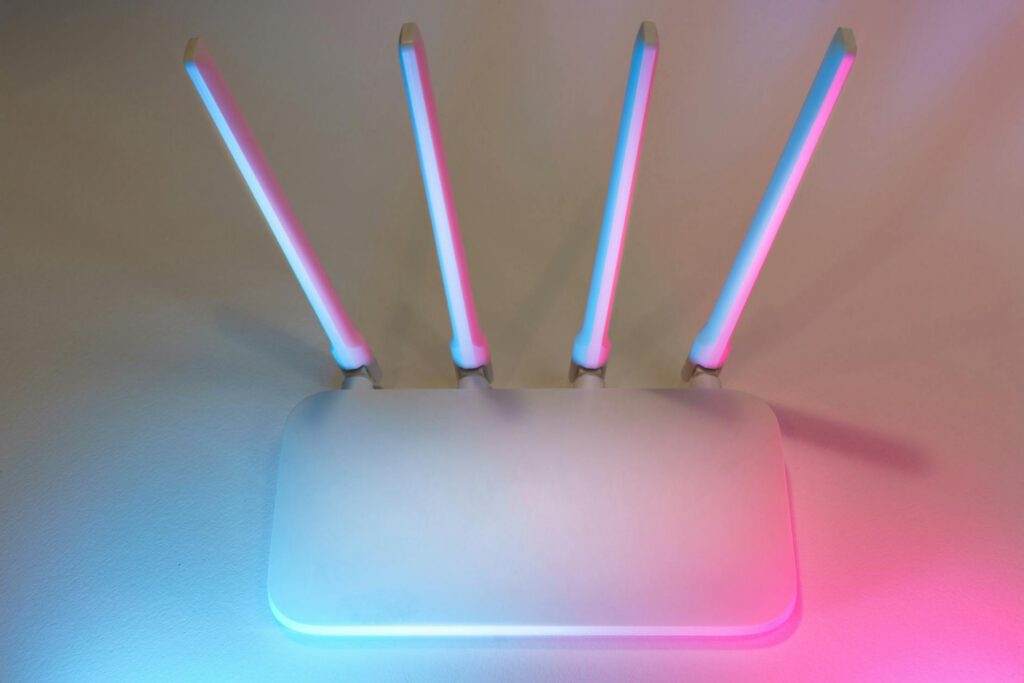
What It Is and Who It’s For
Rain is South Africa’s data-only mobile network, and their 5G home router is pitched as an alternative to fibre — plug it in, connect to 5G, and get broadband-grade speeds without waiting for a fibre installation that might take weeks or never arrive at your address.
For digital nomads in Cape Town, Rain’s 5G router solves a specific problem: getting fast internet when fibre isn’t available at your Airbnb or rental. Not every building in Cape Town has fibre — particularly older apartments in areas like Observatory, Woodstock, and parts of the Southern Suburbs. Rain promises broadband without the infrastructure dependency.
The router is also relevant as a primary connection for nomads on shorter stays (1-3 months) who don’t want to sign a 12-month fibre contract. Rain operates on month-to-month billing with no lock-in, which aligns with how most nomads move.
But 5G fixed wireless has real limitations that the marketing doesn’t emphasise, and Rain’s coverage in Cape Town is patchier than the map suggests.
Key Specs and Plans
- Rain 5G Home plans (as of April 2026):
- 5G Home Standard: R500/month (~$27) — off-peak unlimited (midnight-6pm weekdays), 100 GB peak
- 5G Home Premium: R700/month (~$38) — unlimited 24/7
- 5G Home Basic (4G fallback): R300/month (~$16) — unlimited, but frequently on 4G
- Router: Supplied by Rain (Huawei 5G CPE Pro 2 or similar), R50/month rental or R2,500 purchase
- Contract: Month-to-month, cancel anytime
- Speed claims: Up to 200-300 Mbps down on 5G (real-world varies dramatically)
- Installation: Self-install — plug in and position near window
- Data policy: “Unlimited” with network management during congestion
- Coverage: 5G available in select Cape Town areas; 4G fallback elsewhere
What We Tested — Cape Town Context
We tested Rain’s 5G Home Premium (R700/month) in three Cape Town locations over a month, moving the router between addresses. All speed tests via Ookla Speedtest, wired to router via ethernet where possible.
Sea Point (High Rise apartment, 6th floor, window-facing):
– Morning (8am): 187 Mbps down / 42 Mbps up
– Afternoon (2pm): 145 Mbps down / 35 Mbps up
– Evening (7pm): 68 Mbps down / 18 Mbps up
– Late night (11pm): 210 Mbps down / 48 Mbps up
Strong 5G signal here. Sea Point’s density of towers along the Atlantic Seaboard means consistent coverage. Evening slowdown is real — Rain’s network gets congested when residential users are streaming — but 68 Mbps is still workable.
Cape Town CBD (4th floor office, Bree Street):
– Morning: 165 Mbps down / 38 Mbps up
– Afternoon: 120 Mbps down / 28 Mbps up
– Evening: 55 Mbps down / 15 Mbps up
Good coverage in the CBD core. The evening dip is more pronounced here, likely due to higher user density. Daytime performance is solid for remote work.
Muizenberg (Ground floor flat, Main Road):
– Morning: 22 Mbps down / 8 Mbps up
– Afternoon: 15 Mbps down / 6 Mbps up
– Evening: 9 Mbps down / 3 Mbps up
This is where Rain’s story falls apart. The router fell back to 4G in Muizenberg almost constantly. The coverage map shows Muizenberg as a 5G area (light green), but on the ground, we couldn’t hold a 5G connection for more than a few minutes before dropping to 4G. At 9-22 Mbps, this is mobile broadband, not a fibre replacement.
Load shedding reality: Here’s the critical catch — Rain’s 5G router needs wall power. When load shedding hits and your electricity goes out, the Rain router dies too, just like a fibre ONT. You need a UPS (uninterruptible power supply) or portable power station to keep it running. We paired it with a small 200W UPS (about R1,200 from Takealot) which kept the router alive for roughly 2.5 hours during Stage 2 outages.
Coverage map accuracy: We found Rain’s online coverage checker to be optimistic. Of the three test locations, only Sea Point delivered what the map promised. The CBD was close but with heavier congestion than expected. Muizenberg was flatly misrepresented — listed as 5G coverage but delivering 4G speeds 90% of the time.
What’s Good
Fast when it works. In areas with genuine 5G coverage, Rain delivers speeds that compete with mid-tier fibre. 150-200 Mbps is more than enough for remote work, video calls, and heavy file transfers. In Sea Point and the CBD, daytime speeds were excellent.
No contract. Month-to-month billing is perfect for nomads. Arrive, activate, use it for two months, cancel. No penalty, no early termination fees. This alone makes it worth considering over a fibre contract.
Self-install. No waiting for a technician. Unbox, plug in, position near a window, and you’re online within 15 minutes. Compared to fibre installation (which can take 2-6 weeks in Cape Town), the immediate availability is a genuine advantage.
Reasonable pricing. At R700/month for unlimited 5G, Rain is cheaper than most uncapped fibre plans (which typically start at R800-R1,000/month for 50+ Mbps). If you’re in a strong 5G area, the value is real.
Good router hardware. The Huawei CPE Pro 2 has decent WiFi 6 coverage, handles multiple devices without issues, and the ethernet port means you can wire your primary work device for lower latency.
What’s Not
Coverage is a lottery. Your experience with Rain depends almost entirely on where you live. Move 3 km from Sea Point to Green Point and speeds might halve. Move to the Southern Suburbs and you might be on 4G permanently. You won’t know until you try it at your actual address, and by then you’ve already committed to the router rental.
Evening congestion is brutal. The unlimited Premium plan doesn’t protect you from shared bandwidth. When the neighbourhood is streaming Netflix at 7pm, everyone on that tower suffers. Dropping from 187 Mbps to 68 Mbps at the same address isn’t a minor fluctuation — it’s a different class of connection.
Same load shedding vulnerability as fibre. Without a UPS, Rain’s router is useless during outages. This surprises people who buy it expecting it to be more resilient than fibre during blackouts. The tower itself usually has backup power, but your router doesn’t.
The coverage map lies. Not maliciously, but optimistically. Rain’s map shows theoretical coverage, not guaranteed service quality. Testing at your specific address is the only way to know what you’ll get.
Latency is higher than fibre. We measured 15-25 ms on Rain’s 5G versus 3-8 ms on fibre. For general web use and video calls, this difference is imperceptible. For VoIP, gaming, or latency-sensitive applications, it’s noticeable.
Router is address-locked. Rain’s home product is technically tied to a service address. While we moved the router between locations for testing, Rain’s terms require you to use it at your registered address. If they detect otherwise, they can suspend service.
The Verdict
Rain’s 5G router is a genuine fibre alternative in Cape Town — but only in specific areas. If you’re in Sea Point, the CBD core, or parts of the Atlantic Seaboard where 5G coverage is strong, Rain delivers broadband-grade speeds at a competitive price with no contract commitment. That’s a compelling package for nomads.
If you’re in Muizenberg, the Southern Suburbs, Hout Bay, or the fringes of Rain’s coverage map, you’ll likely get a mediocre 4G experience for R700/month. At that price, a local Vodacom SIM with a decent data bundle and a portable router would serve you better.
The recommendation: check Rain’s coverage map, then immediately discount it by one tier. If it shows “excellent 5G,” expect good 5G. If it shows “good 5G,” expect 4G fallback. If it shows “moderate,” look at fibre options instead.
For stays of 1-3 months where fibre isn’t available but you’re in a confirmed 5G area, Rain is the best fixed wireless option in Cape Town. Just budget for a small UPS to handle load shedding.
Quick Reference
| Price | R300-R700/month + R50/month router rental |
| Best value plan | 5G Home Premium at R700/month (unlimited 24/7) |
| Where to buy | rain.co.za or Rain stores (Canal Walk, V&A) |
| Setup time | 15 minutes (self-install) |
| Contract | Month-to-month, no lock-in |
| Best for | Nomads in 5G-covered areas needing no-contract broadband |
| Not ideal for | Southern Suburbs, Muizenberg, areas with marginal 5G |
| Rating | 3.5 / 5 |