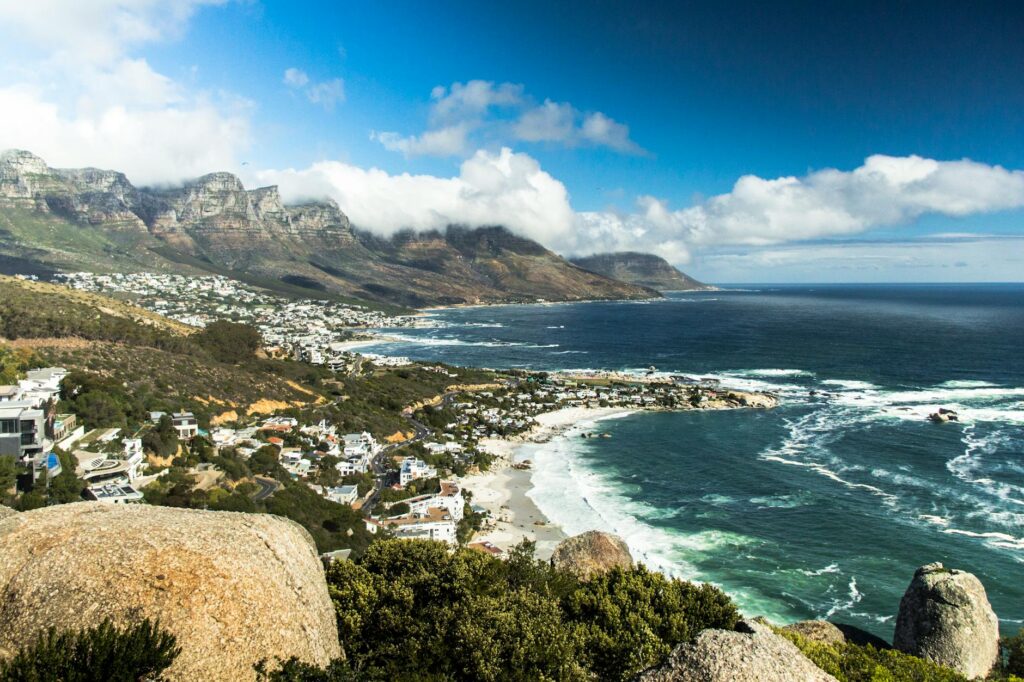
Cape Town’s beach geography has one trick to it. The Atlantic Seaboard (Camps Bay, Clifton, Llandudno) faces west, has dramatic mountain-backdrop scenery, and has water that sits at 12 to 15°C year-round. You will not swim in it except as a fast plunge. The False Bay coast (Muizenberg, St James, Fish Hoek, Simon’s Town) faces east, has gentler backdrops, and has water that warms to 18 to 21°C in summer. You can actually swim in it for an hour.
Most tourist guides push Clifton and Camps Bay as the iconic beach experience. They are, but they are not where you go to swim. Here is the resident’s version.
The two coasts in one sentence each
Atlantic side: look at it, walk along it, sunset on it, plunge for a minute, retreat to a restaurant.
False Bay side: actually swim, learn to surf, take a warm-water walk, spot penguins and whales.
Know which coast you want before you plan the day.
The shortlist
Clifton 4th Beach (Atlantic)
The one with the postcard. Clifton has four consecutive beaches separated by granite boulders, numbered 1st to 4th. 4th is the biggest, the easiest to reach, and the most social. Protected from the south-easter (the Cape Doctor) by the mountains behind it. Fine white sand, dramatic Twelve Apostles backdrop, and a crowd that ranges from families to fashion shoots. Bring a swimming costume but not real swim ambitions — the water is arctic. Parking is a nightmare on summer weekends; Uber in if you can.
Good for: sunset, long walks, a day on the sand with a book. Surprisingly wind-protected.
Camps Bay (Atlantic)
The bigger, flatter, more developed version. Camps Bay is a single long strand backed by a strip of restaurants and bars. Easier parking, more shade at the beachfront, and a sunset scene that is the Cape Town equivalent of Santa Monica. Water is as cold as Clifton. The restaurants are overpriced but the view from any of them at 19:00 is worth one expensive sundowner.
Good for: sundowners with visiting friends, a low-effort beach day with food and drinks, a first-week “feel the city” moment.
Llandudno (Atlantic, between Camps Bay and Hout Bay)
The most beautiful beach in the city. Llandudno sits in a little granite cove with huge boulders at each end, and the surf comes in cleanly off a long-period swell. No restaurants, no commercial strip, no developed parking — just the beach and the road access. Residents use it for surfing and for the sunset, and tourists often miss it entirely. A 20-minute drive from the CBD.
Good for: photographers, surfers, a quieter sunset, couples. Bring your own everything.
Noordhoek Long Beach (Atlantic, over the mountain)
An 8 km white-sand stretch on the Noordhoek side of Chapman’s Peak. The biggest, emptiest beach in the metro. Horse riders use it. Walkers use it. Kite surfers use it on the windy days. Water is cold but shallower than the Atlantic Seaboard, so less brutal. Go for the space.
Good for: long walks, dog walks (yes, dogs are allowed on Long Beach), horse-riding moments, kite surfing.
Muizenberg (False Bay)
The surf beach. Muizenberg has the famous row of coloured beach huts, a long flat white-sand stretch, and surf schools running all day. Water at 18 to 20°C in summer, swimmable year-round in a wetsuit. This is where you go to learn to surf and to spend a mellow sunny-Saturday morning in the water. Read our Muizenberg surfing guide for the lesson breakdown.
Good for: learning to surf, a beginner-friendly swim, a family morning, coffee after a swim.
St James tidal pool (False Bay)
The safe-swim spot on the False Bay train line. St James has a large, shallow, walled tidal pool right next to the railway station with clear water, no waves, and a shallow entry that works for kids and non-confident swimmers. The coloured bathing boxes backdrop is iconic. Come for a morning swim, coffee at a nearby café, and a train back to Muizenberg or Simon’s Town.
Good for: calm warm-water swimming, families, a resident-feel morning that tourists rarely find.
Fish Hoek (False Bay)
The serious swimmer’s beach. Fish Hoek has a long flat beach, mild surf, a shark spotter, and clear water. The open-water swimming club swims every weekend morning. Quiet on weekdays, busy on weekends, no commercial strip.
Good for: an actual swim without learning to surf, open-water training, a flat windy day where you just want to be near the water.
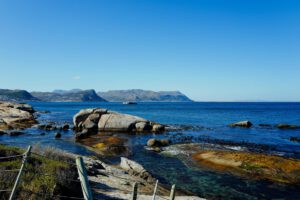
Boulders Beach (False Bay, near Simon’s Town)
The penguin one. Boulders is a Cape Nature reserve on the Simon’s Town side with a boardwalk through a colony of African penguins and a small swim-access beach inside the reserve. Entry fee R220 for international visitors, R80 for South Africans with ID. Crowded in high season. The swim beach inside the reserve is small but warm and calm. Read our Boulders Beach penguins guide for the full version.
Good for: a one-time tourist visit with an actual purpose, a slow morning with the penguins plus a small warm swim.
Wind direction rule
The biggest single factor in a Cape Town beach day is the wind.
- South-easter (the Cape Doctor) blowing: Atlantic Seaboard is sheltered in some spots (Clifton 4th is tucked in), but Camps Bay will have sand-blast. False Bay side is exposed. Pick Clifton 4th or bail to a restaurant.
- North-wester blowing (winter front, rarely summer): False Bay is sheltered, Atlantic is exposed. Pick Muizenberg, St James, or Fish Hoek.
- Still day (rare but magical): go anywhere.
Check WindGuru or Windy.com before committing to a beach 40 minutes’ drive away. Our rule: if the forecast shows over 25 km/h, pick the sheltered coast.
What to bring
- Sunscreen. Cape Town is at 34°S and the sun is stronger than it looks. Factor 30+ minimum.
- A wind-layer. Even on a warm day, a beach wind can drop the feels-like temperature by 10°C fast.
- Water. Beach cafés exist at Camps Bay and Muizenberg. At Llandudno, Long Beach, and the more remote spots, there is nothing. Bring 1 to 2 litres.
- Cash for parking attendants. R10 to R20 per park, tipping-based, at most beaches.
- Shade. Umbrellas are useful at Muizenberg and Camps Bay. Most other beaches have some natural shade.
Safety
- Swim between the flags. Only where lifeguards are on duty. Cape Town currents are real.
- Shark spotters. Muizenberg, Fish Hoek, and Monwabisi have active shark spotter programmes with flag signalling (green, black, red, white). Respect the flags.
- Personal safety. Do not leave valuables unattended on any beach. Leave them in a locker or take them into the water in a dry bag. This is standard SA beach hygiene.
- Rip currents. The Atlantic beaches have strong rips. If caught, swim parallel to shore until you are out of it, then swim in.
What it all costs
- Beach day with Ubers + a coffee + a sundowner: R300 to R700
- Boulders Beach reserve fee (international): R220
- Surf lesson at Muizenberg: R450 to R600 with gear
- Beach restaurant dinner for two: R600 to R1500
The beach itself is always free. The access and the ancillary food are where the cost lives.
The verdict
For a swim, go False Bay. For a sunset and a photo, go Atlantic. For a long empty walk, go Noordhoek. For a surf lesson, go Muizenberg. For the penguin moment, go Boulders once. Check the wind forecast before you commit to a 40-minute drive. Rotate through both coasts depending on the weather and you will use Cape Town’s beaches the way residents do.
—
Keep reading
- Muizenberg surfing guide
- Boulders Beach penguins guide
- Cape Point and peninsula day trip
- Cape Town safety guide
- The BaseCPT Nomad Hotlist 2026
Tools we trust
Partners we use and recommend, tested in Cape Town.
We may earn a commission on purchases made through these links, at no extra cost to you. We only recommend products and services we actually use.